TLDR: For its simplicity, most of its versions (even modern iterations) are very polished and oddly addictive when playing with, either another person, or just the CPU.
It almost makes me forget it's pretty much a copy of Tennis for Two.
V V V | TOO LONG, DID READ | V V V
DEVELOPMENT AND SUCH
Once upon a time...
There was a silly company by the name of Atari Inc.
Their founders, some time before, had seen a sick game in, like, a university or something. A game that was linked to multiple computers (as in, distributed. Not multiplayer). Of course, specifically at that time, the first thought was capitalization.
And so they tried to make a commercial interactive game akin to those claw-things, but instead of that, they made a computer game that was kinda like a ripoff of that one game from the MIT, Spacewar!. And called it Computer Space (very original).
That didn't work too well, but they kinda got the basics down, so when Atari Inc. was founded, they tried again with this PONG game. Which was kinda like a ripoff of Tennis For Two, a side project from a cool physicist.
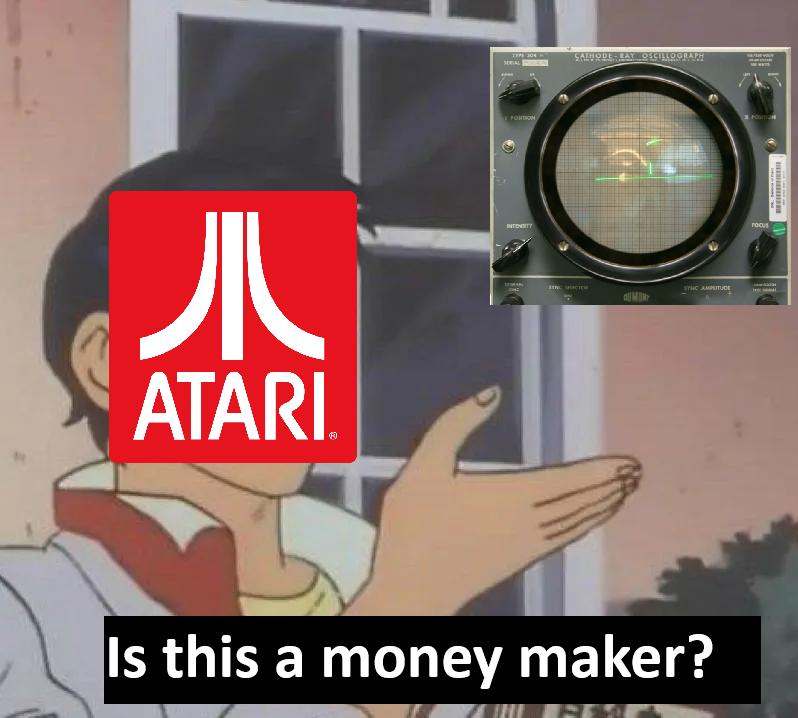
^ I say that, but really what happened is that AFTER Nolan Bushnell and Ted Dabney founded Atari Inc. formally, they had a bunch of ideas with the only constant of it being a project based on coin slot logic.
And so they approached this pinball/slot machine manufacturer corpo named Bally Manufacturing to pitch the idea of a pinball-like video game for distribution. And for some reason they accepted.
Cool guy Allan Alcorn was hired because the founders worked with him when they all worked at Ampex, an electronics company. And before they actually got to make a prototype for the hockey-type game, Dabney just told him to practice on something simpler (but very much table tennis-oriented), since Alcorn didn't have experience on games like that.
Yeah, whatever, point is that this simpler concept Alcorn made was what ended up being PONG. A cool and simple prototype that may or may not have drawn inspiration on a prototype tennis game for the Magnavox Odyssey. Which makes me realize we throw a lot of shade onto Atari for copying Tennis for Two, but if anything, that was Magnavox first.
And that's pretty much it. Something simpler than the original idea became the main thing. Cool, right?
This disjointed and mildly inaccurate retelling of the develpoment of the prototype serves to see how there weren't many intentions behind the game itself other than make it work and see if they could distribute in the same manner as slot machines were.
THE GAMEPLAY
I mean...
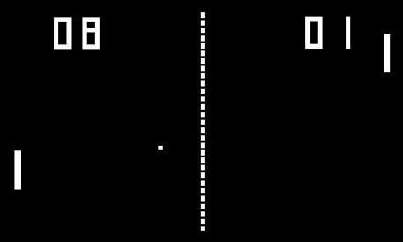
Two paddles, one ball.
Don't let the ball cross your threshold.
I wish I had something more interesting to tell you, but the real charm of PONG is that it's simple.
I feel like if I over-analyze it and try to link a pretty basic gameplay loop to something like, I don't know, the meaning of life, it just would be extremely pedantic.
It's a system that works, both with someone else to play with, or against an AI opponent (not that such existed back then, but current iterations do support it). So I'd say they accomplished what they were looking to accomplish, which was that it worked (in carefully crafted systems and successful distribution).
Yep. That's about it.
-lix